Undyed cotton underwear: nothing between fibre and skin
Most "natural" underwear is white cotton that has been bleached, then dyed a colour called oatmeal. Ours is brown and green cotton that came out of the boll that way. There is no dye lot, no bleach bath and no optical brightener — which is the whole point.
Three things sold as "undyed" — only one is
The word is used loosely in this industry, so it is worth being precise before you compare prices:
- Never-dyed fibre. The cotton grew brown or green. It is scoured and finished, nothing else touches the colour. This is what we make, and it is what the price premium pays for.
- Dyed then stripped. White cotton is dyed to a shade, then colour-stripped so it can be re-dyed or sold as "natural". Cheaper, and chemically the opposite of what the buyer wanted.
- Ecru / natural white. No pigment at all, but usually bleached to get there. Harmless, honest, but it is not coloured cotton and it will not have the brown or sage tone.
If a quote for "undyed cotton underwear" is within 5% of a normal dyed brief, it is almost certainly the second or third category.
Why undyed matters for sensitive skin
Textile dermatitis is usually blamed on "the cotton" when the culprit is one of four things added to it: reactive dye residue, formaldehyde-based easy-care finishing, optical brighteners, and softener. None of those are present in a garment whose colour comes from the plant, provided the trims are chosen with the same discipline — which is why our waistbands use cotton-covered elastane and our care labels are woven, not printed with plastisol.
| Input | Conventional dyed brief | Our undyed brief |
|---|---|---|
| Dye | Reactive or vat, 2–6% owf | None |
| Bleach | Usually peroxide or chlorine | None |
| Optical brightener | Common on white and pastel | None |
| Formaldehyde finishing | Occasional, for shrink control | Mechanical shrinkage only |
| Softener | Silicone or cationic, common | None — the hand comes from the knit |
What we actually make
Four styles cover most of the demand. All of them are cut and sewn in our own workshop in Changsha, not brokered out:
- Men's boxer briefs — 180–200 gsm single jersey, 6-inch inseam, double-layer gusset, USD 2.10–3.40.
- Women's briefs — mid-rise, sage green or camel brown, cotton gusset, USD 1.60–2.60.
- Camisoles and rib vests — 160–200 gsm, self-fabric straps, USD 2.50–4.00.
- Baby bodysuits — 190 gsm interlock, flat seams, nickel-free snaps, USD 3.25–4.90.
On the fibre side, the honest technical picture (why it is always blended, how the shade behaves) is on the naturally colored cotton page. If you are sourcing for a brand rather than buying for yourself, start with wholesale and private label.
How to check the claim yourself
You do not have to take a supplier's word for it. Three documents settle the question:
- A dyeing declaration from the knitter or garment factory stating no dye, no bleach, no optical brightener was used on the lot.
- OEKO-TEX Standard 100 test report on the finished garment — it screens for azo dyes, formaldehyde, heavy metals and alkylphenols regardless of whether the fibre was dyed.
- A wash test. Cut a 10 cm square, wash it five times at 40°C with white cotton. Brown natural cotton will darken slightly; a stripped-then-redyed fabric will bleed grey.
We supply the first and third with every sample request, and the second on orders above 3,000 pieces where the test cost can be absorbed.
Care, in one paragraph
Machine wash cold or at 30°C with a pH-neutral detergent, skip bleach and softener, tumble on low or line dry in shade. Brown deepens over the first ten washes; green softens toward sage. Neither is a defect — it is pigment behaving like pigment. Full detail in our washing guide.
Undyed cotton underwear: direct answers
Is undyed cotton really dye-free?
Three different things get called undyed. (1) Fibre that was never dyed — what we sell. (2) Fabric that was dyed and then stripped, which is not the same thing and leaves residue. (3) Ecru or natural white cotton, which has colour but no pigment; it is still usually bleached. Ask which one you are being quoted.
Does undyed cotton shrink more?
No more than dyed cotton of the same construction. Shrinkage comes from knitting tension and finishing, not from dyeing. Our single jersey is finished to within 5% length and 4% width after three washes at 30°C.
Can undyed cotton be washed hot?
It can, but there is no need. 30°C with a pH-neutral detergent keeps the shade even. Above 60°C you accelerate the natural oxidation that turns brown cotton darker and green cotton duller.
Is it good for eczema?
We are a factory, not a clinic, so we will not make a medical claim. What we can say is that the garment has no dye, no optical brightener and no softener residue, and that several of our customers buy it precisely because their customers react to those three things.
What is the minimum order for undyed cotton underwear?
300 pieces per style and colour, 1,000 pieces for a fully custom pattern with your own grading. Sample lead time is 7–10 days, bulk is 25–30 days after approval.
The fibre, before it becomes a brief
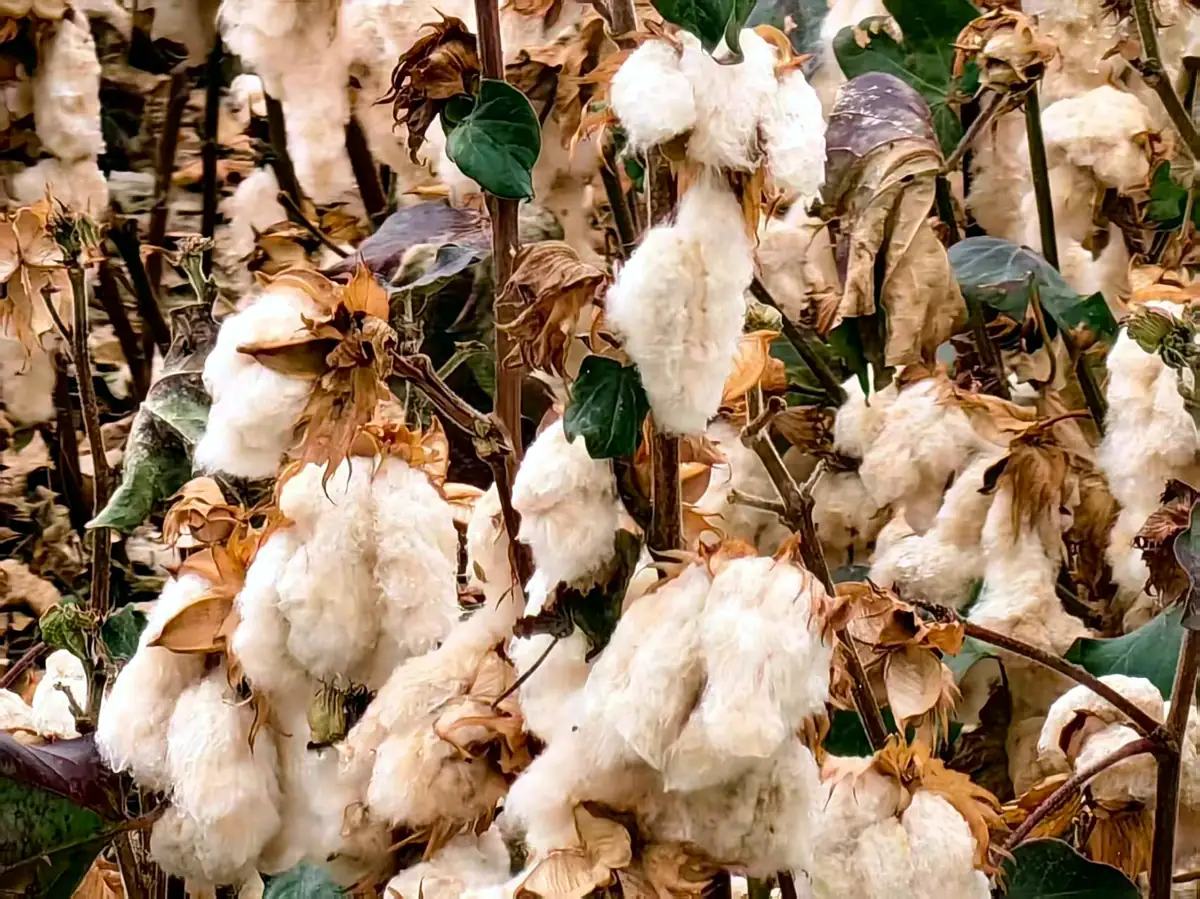
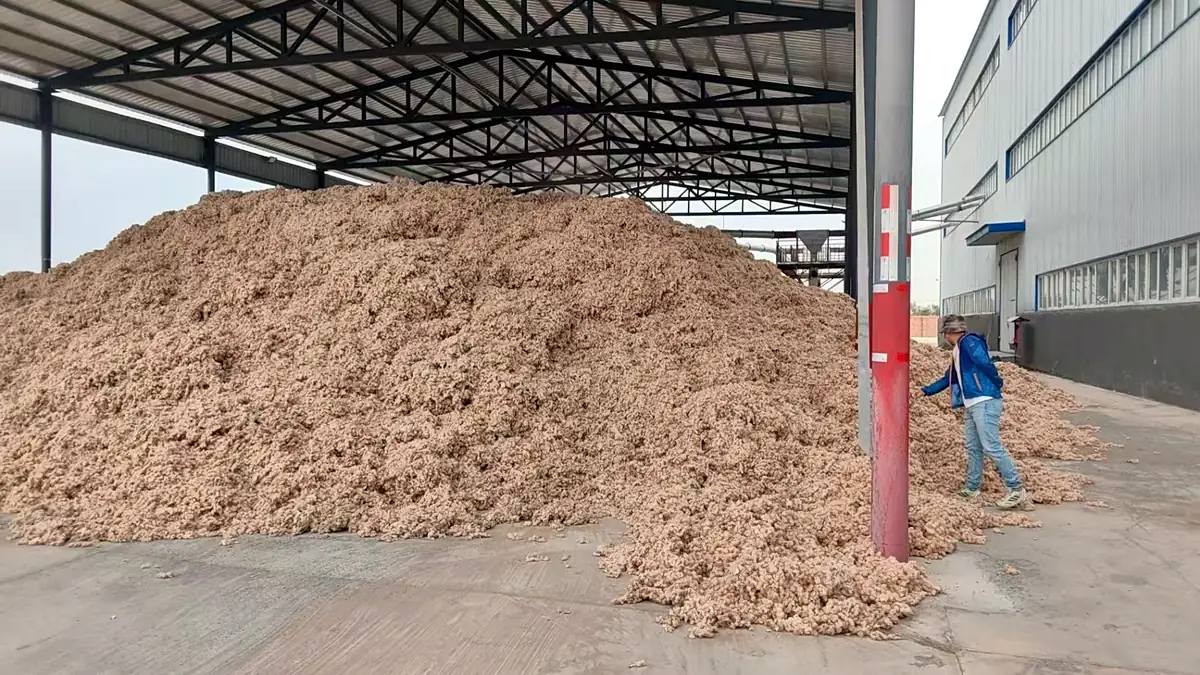
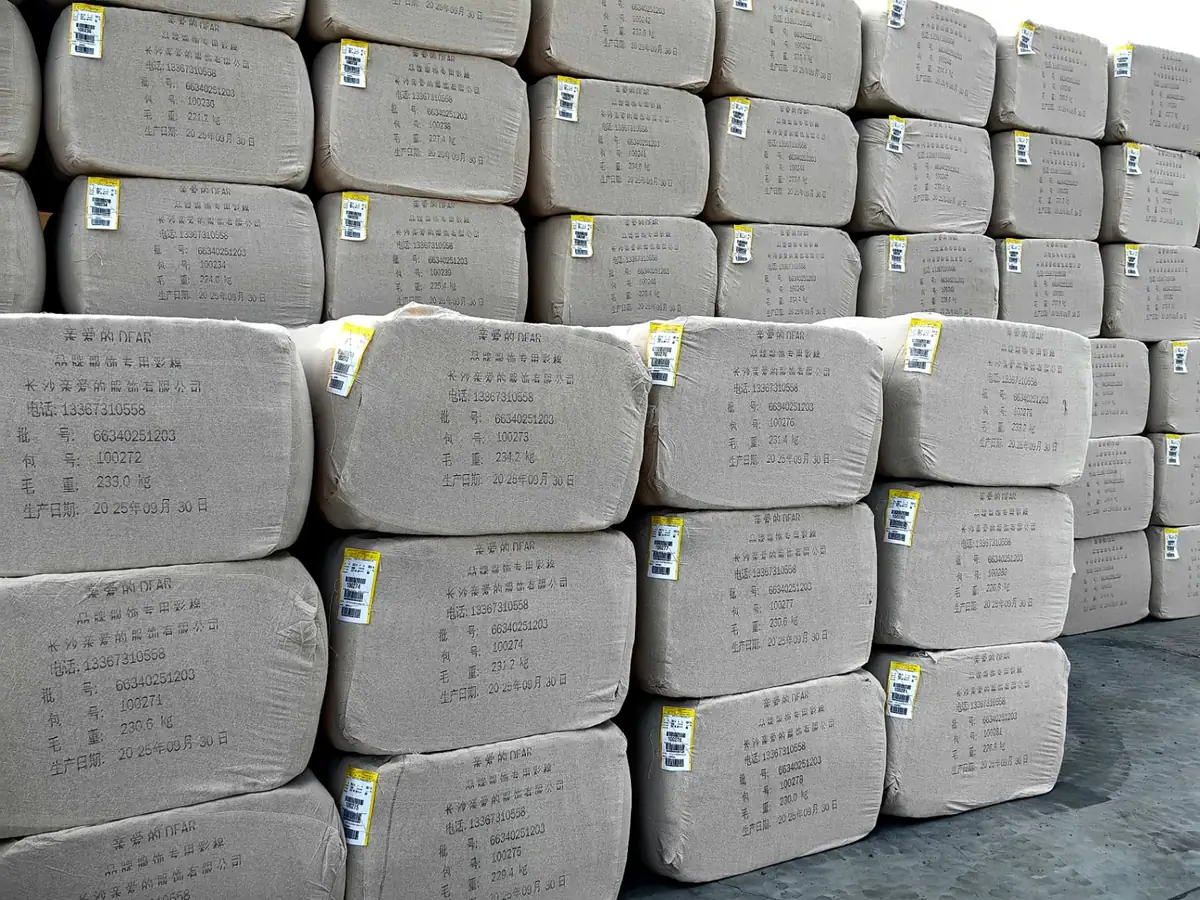
Brown lint at the gin, pressed bales, and the boll it came from.
Want undyed samples on your desk?
Tell us style, size curve and quantity — we send a sample card with fabric swatches and the dyeing declaration.